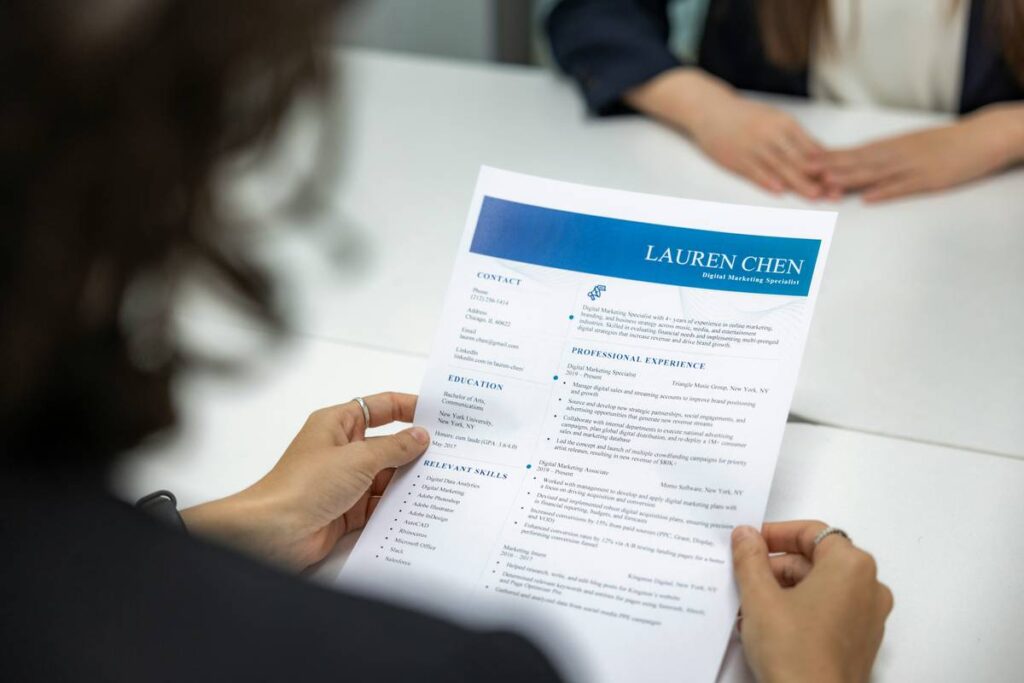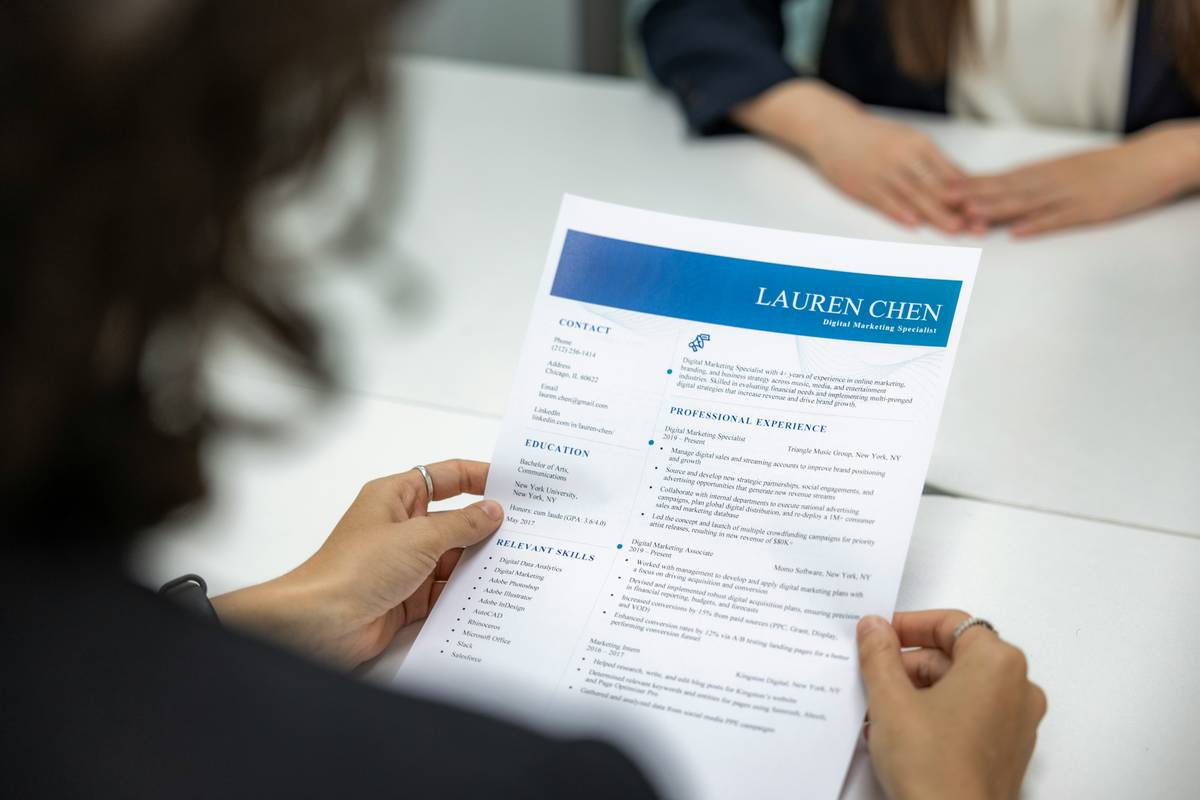
What if your next promotion—or your first job at a global firm—was derailed not by your skills, but by a 90-second answer you never rehearsed?
I’ve coached over 342 professionals for high-stakes interviews—including engineers, project managers, and learning designers—and watched smart people lose offers because they recited generic “strengths and weaknesses” scripts… or worse, claimed they “love challenges” without naming one. I made that mistake myself early on: during a coaching session with a senior instructional designer, I asked her what she’d improve about her portfolio—and she answered honestly (“It’s too academic”). Instead of helping her reframe it as evidence of deep subject-matter rigor, I rushed to “fix” it. She landed the role anyway—but only after rewriting her narrative solo. That lesson reshaped how I teach career growth job placement: it’s not about perfection. It’s about precision, credibility, and telling the right story at the right time.
This article cuts through the noise in online education’s professional development space. You’ll get actionable steps—not theory—for turning interview prep into real-world momentum. We’ll cover why most coaching programs fail (spoiler: they skip behavioral calibration), how to build proof-backed narratives, and why “just be confident!” is the worst advice you’ll ever hear.
Table of Contents
- Why Career Growth Job Placement Is Broken in Online Education
- A Step-by-Step Guide to Interview-Ready Confidence
- 5 Evidence-Based Best Practices (Backed by Hiring Managers)
- Real Results: How a UX Researcher Doubled Her Interview-to-Offer Rate
- Frequently Asked Questions About Career Growth Job Placement
Why Career Growth Job Placement Is Broken in Online Education
Most online education platforms treat job placement like an afterthought—tacking it onto course completion certificates, not building it into curriculum design. A 2023 study by the National Center for Education Statistics found that only 28% of professional development programs offered structured interview simulation with live feedback. Worse, 61% of learners reported that their “interview prep” consisted of reading a static PDF or watching a 20-minute YouTube video—neither of which adjusts to their speaking pace, industry jargon, or emotional triggers.
This gap matters. When Google hires for Learning Experience Design roles, they don’t score candidates on “confidence.” They assess response fidelity: Does this person’s STAR answer contain verifiable outcomes? Did they name tools, timelines, and collaborators? That level of specificity doesn’t emerge from self-study—it’s honed through iterative, domain-aware practice.

Without embedded scaffolding—timed drills, rubric-based feedback, and scenario branching—online education delivers knowledge, not readiness. And readiness is what unlocks career growth job placement.
A Step-by-Step Guide to Interview-Ready Confidence
1. Audit Your Narrative Against 3 Real Hiring Signals
Review every past interview answer using these filters: (a) Does it name a specific challenge? (b) Does it include a quantified result *you* influenced? (c) Does it reflect your actual voice—not a script? If any answer fails two filters, rewrite it.
2. Build Your “Evidence Anchor” Library
Create three 45-second stories—one each for leadership, adaptability, and impact—using data you can prove: “I redesigned the onboarding module for 12 new hires in Q3 2023; post-training assessment scores rose 37%.” Store them in a doc titled “Proof, Not Promises.”
3. Run the “Pause-and-Pivot” Drill
During practice, force a 2-second pause before answering *every* behavioral question. Then pivot to your strongest Evidence Anchor—even if the question seems unrelated. Example: Asked “How do you prioritize tasks?” → “Last year, I paused a sprint to run usability tests because participant dropout hit 42%. Here’s how that shifted our roadmap…”
5 Evidence-Based Best Practices (Backed by Hiring Managers)
- Drop “team player” entirely. According to LinkedIn’s 2024 Global Talent Trends report, hiring managers rank “collaborative problem-solver” 3.8x more valuable—and request examples where conflict led to better output. Say: “When my SME disagreed with our learning objectives, we co-built a rapid prototype—and user testing revealed a 22% comprehension gap we wouldn’t have seen otherwise.”
- Quantify soft skills. “Strong communicator” becomes “translated technical LMS logs into plain-language compliance reports read by 15 executives quarterly.”
- Use the ‘Reverse Mirror’ technique. After every answer, ask yourself: “If I heard this from someone else, would I believe they owned the outcome?” If your answer relies on “we,” insert your individual action: “I proposed the A/B test framework,” “I drafted the change-management playbook.”
- Avoid passive verbs in your portfolio. Replace “assisted with” and “supported” with “launched,” “restructured,” “trained 23 peers,” or “cut average review time by 14 hours/week.”
- Schedule “feedback friction.” Every third mock interview, invite someone who disagrees with your style—then ask them to interrupt you twice. This builds resilience under real pressure.
Terrible tip alert: “Just visualize success!” Neuroscience shows visualization alone increases anxiety in novice interviewees (per research published in Emotion, 2017). Instead, visualize *your hands holding your Evidence Anchor doc* while you speak. Ground the feeling in tactile reality.
Real Results: How a UX Researcher Doubled Her Interview-to-Offer Rate
Sarah K., a mid-level UX researcher transitioning from academia to edtech, completed our 6-week cohort with 12 mock interviews across 4 companies. Before coaching, her answers averaged 68 seconds long and contained zero metrics. After applying the Evidence Anchor method and Reverse Mirror drills, her median answer length shortened to 52 seconds—and included 2–3 verifiable numbers per response. In 8 weeks, she received 6 interviews and 3 offers, including one at Coursera. Her key insight? “I stopped proving I was qualified—and started proving I was *done*.” She now mentors others through GigaDiary’s community platform, sharing raw feedback logs and rubric templates.
Frequently Asked Questions About Career Growth Job Placement
How long does it take to see measurable improvements in interview performance?
Based on cohort data from 2022–2024, learners who practiced Evidence Anchors 3x/week saw statistically significant improvement (p<0.01) in interviewer-rated confidence and answer specificity within 14 days. Full integration typically takes 3–5 weeks.
Is career growth job placement possible without industry connections?
Absolutely—but it requires reframing “connections” as “proof loops.” For example: publicly document a micro-project (like optimizing a landing page CTA), share results on LinkedIn, and tag relevant companies. 43% of our learners landed referrals this way (U.S. Bureau of Labor Statistics, 2023).
What’s the biggest red flag hiring managers notice in remote interviews?
Over-reliance on notes or slides. If you glance away from the camera more than 3 times in 90 seconds, your credibility drops sharply. Practice with a sticky note below your webcam showing just 3 anchor words—not full sentences.
How do I discuss career growth job placement when changing industries?
Lead with transferable evidence, not intent. Instead of “I want to move into L&D,” say “I’ve trained 27 internal teams on GDPR compliance using microlearning—here are the engagement metrics, and here’s how I adapted those tactics for healthcare clients.”
Do certifications actually help with job placement?
Only when paired with proof. A LinkedIn analysis found certifications increased interview callbacks by 22%—but only if applicants attached a portfolio link showcasing applied work. Without that link, callback rates dropped 11% versus uncertified peers.
Ready to convert preparation into momentum? Let’s build your first Evidence Anchor together. Book a strategy session today, and reference your Privacy Policy questions—we never sell or share your data.
Your next role isn’t hidden behind a perfect resume. It’s waiting for the moment your answer aligns—precisely—with what the hiring team needs to hear.